


Class AAA System For Small-Area Solar Cells
Quick, easy, and reliable photovoltaic testing
Overview | Specifications | Features | Gallery | Software | In the Box | Resources and Support
A carefully calibrated array of LEDs bring you a high quality spectrum at impressively low costs. Achieve excellent spectral match and high spatial and temporal uniformity for testing small area devices. Following IEC 60904-9:2020 international standards, the Ossila LED Solar Simulator easily achieves:
- AAA Classification over 15 mm diameter area
- ABA Classification over 25 mm diameter area
Start reliably testing your solar devices immediately with easy setup, minimal maintenance, and virtually no warm up time. For a complete testing solution, the LED lamp is included in the solar cell testing kit.

Customize the Spectral Output
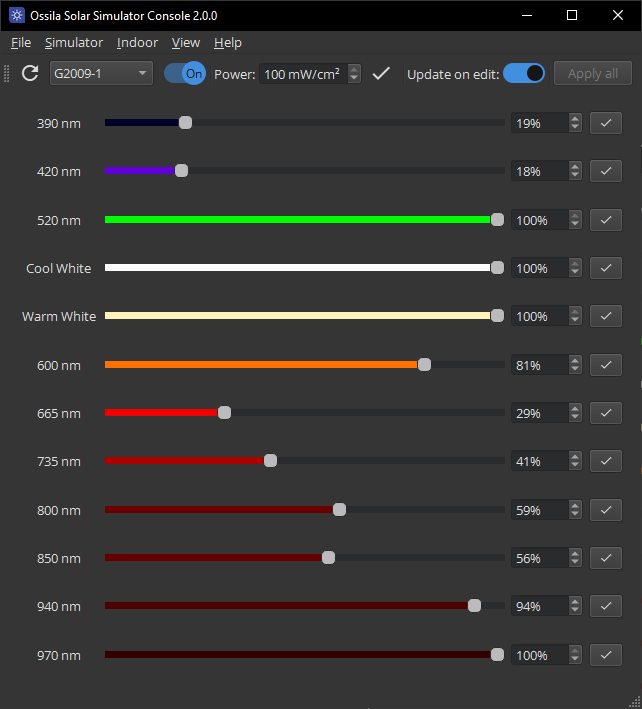
Individual LED power control
across 350 nm – 1000 nm

Great Value & a Long Lifetime
Use reliably for 10,000 hours
across multiple experiments

Short Warm-up Time
Start testing at 1000 W/m2
irradiance in minutes

Zero Explosion Risk
Safe and efficient LED bulbs
with minimal maintenance
Specifications
| Spectral Match | A |
|---|---|
| Spatial Uniformity (over 15 mm diameter area) | A |
| Spatial Uniformity (over 25 mm diameter area) | B |
| Spatial Uniformity (over 32 mm diameter area) | C |
| Temporal Instability | A |
| Type | LED-based, steady state |
|---|---|
| Spectral Deviation | <70% |
| Spectral Coverage | >80% |
| Working Distance | 8.5 cm (3.35") |
| Irradiance* | 1000 W/m2 |
| Wavelength Range | 350 nm - 1000 nm |
| Maximum Lamp Time | 10000 hours |
| Lamp Dimensions (L x W x H) | 10.5 cm x 9.0 cm x 8.0 cm (4.13" x 3.54" x 3.15") |
| Weight | 600 g (1.32 lbs) |
* +/- 5% at working distance and calibration temperature.

Classification
The Ossila LED Solar Simulator is AAA rated for small area devices, which is ideal if you already use our 20 mm x 15 mm substrates. It also delivers class ABA illumination for testing large area devices which can be made on our 25 mm x 25 mm substrate systems. We individually calibrate each system with a NIST traceable photo radiometer and include a performance report with each unit.
The improved solar simulator has slightly increased spectral coverage across the visible spectrum, and reduced spectral deviation compared to previous versions, while still maintaining 1 Sun Irradiance between 380 – 1000 nm.
While both version solar simulators achieve AAA classification over a 15 mm area, the new solar simulator (released January 2026) has a marginally improved spectral match. Previous classification graphs (for Solar Simulators purchased before 2025) can be found on our Classification Data page.
Spectral Irradiance
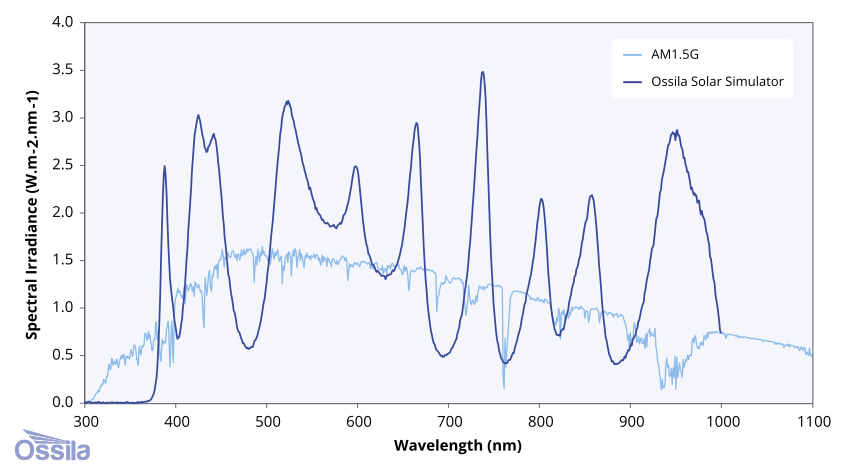
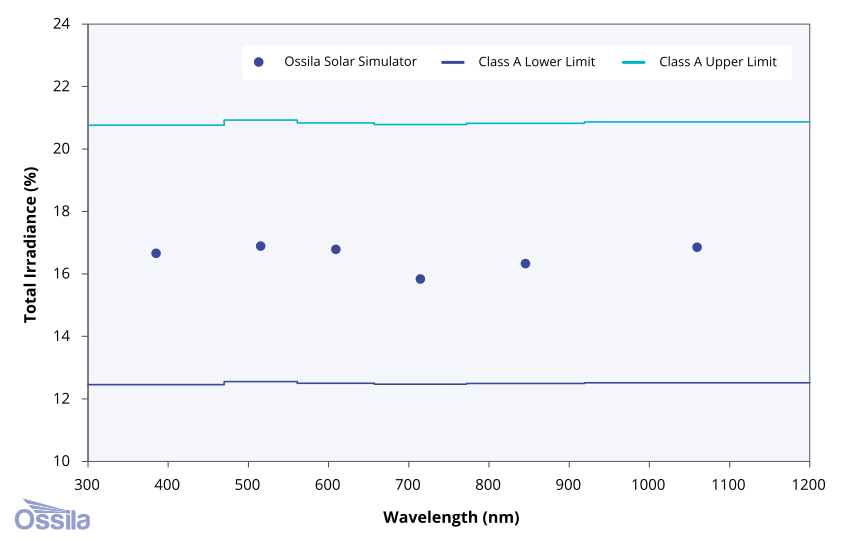
The programmed spectral irradiance of the LED solar simulator is at 1 Sun (left). Automatically, the lamp emits a total integrated power of 100 mW/cm2 (1 Sun) over the wavelength range 350 nm – 1000 nm. Our LED solar simulator achieves a Class A rating within each wavelength range for small area devices.
Spectral Match
Spatial Uniformity
Temporal Instability
The spectral match classification measures how well an LED solar simulator replicates the solar spectrum according to wavelength distribution. The Ossila LED Solar Simulator achieves Class A output in all wavelength categories at 1 Sun irradiance.
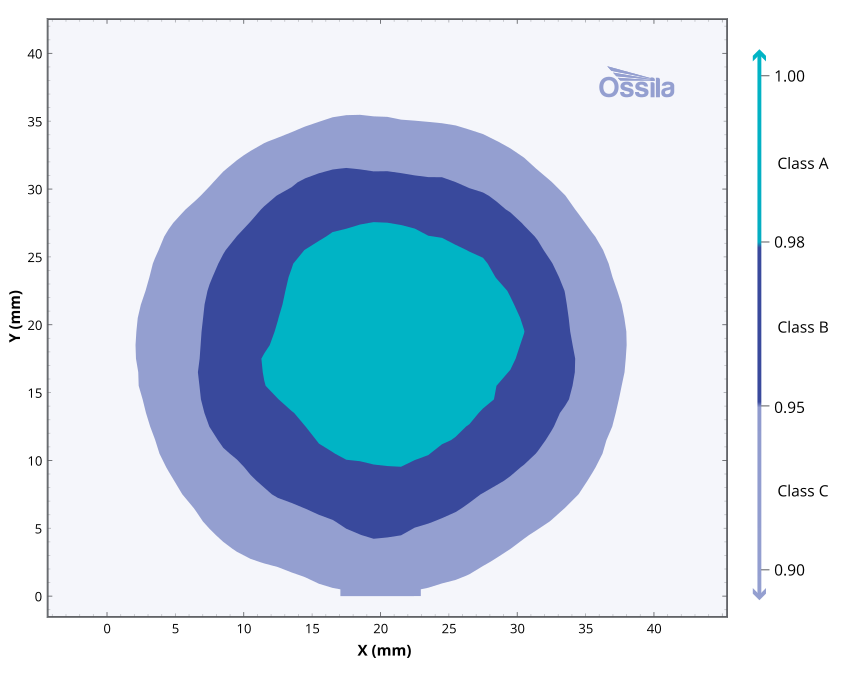
At a working distance of 8.5 cm and output power of 1 sun, our solar simulator achieves a spatial non-uniformity Class A rating over a 15 mm diameter. It also achieves a class B rating over 25 mm diameter, and a class C rating at 32 mm diameter.
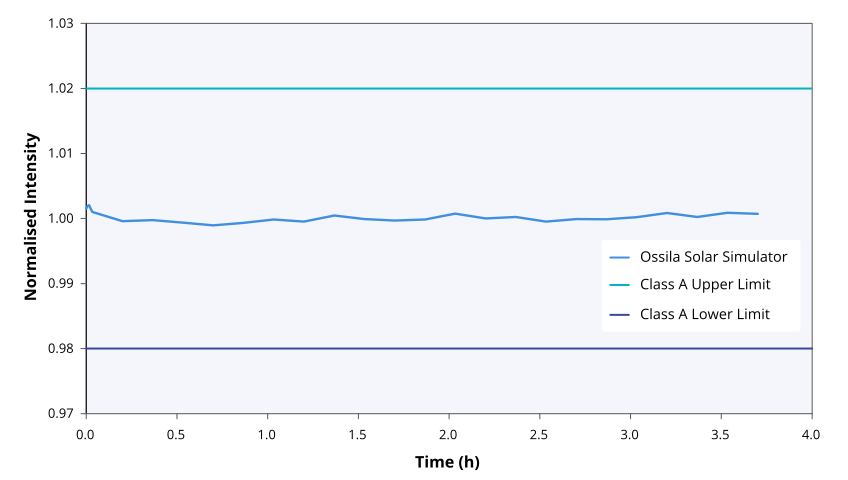
The temporal instability classification measures the output consistency. Our solar simulator easily achieves Class A temporal instability. Conduct long-term experiments or lifetime measurements without worrying about spectral fluctuation.
Documentation
 Example calibration certificate
Simple Photosensitive Research
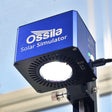
Source Reliable, Calibrated Light
Reliably and accurately mimic the solar spectrum in your photovoltaic research with a calibrated array of light emitting diodes. The simple setup makes it easy to integrate the system into your workflow while keeping your measurements stable and repeatable. Alongside a long lifetime and good temporal stability, the solar simulator also boasts low running costs, zero maintenance, and no explosion risk.
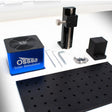
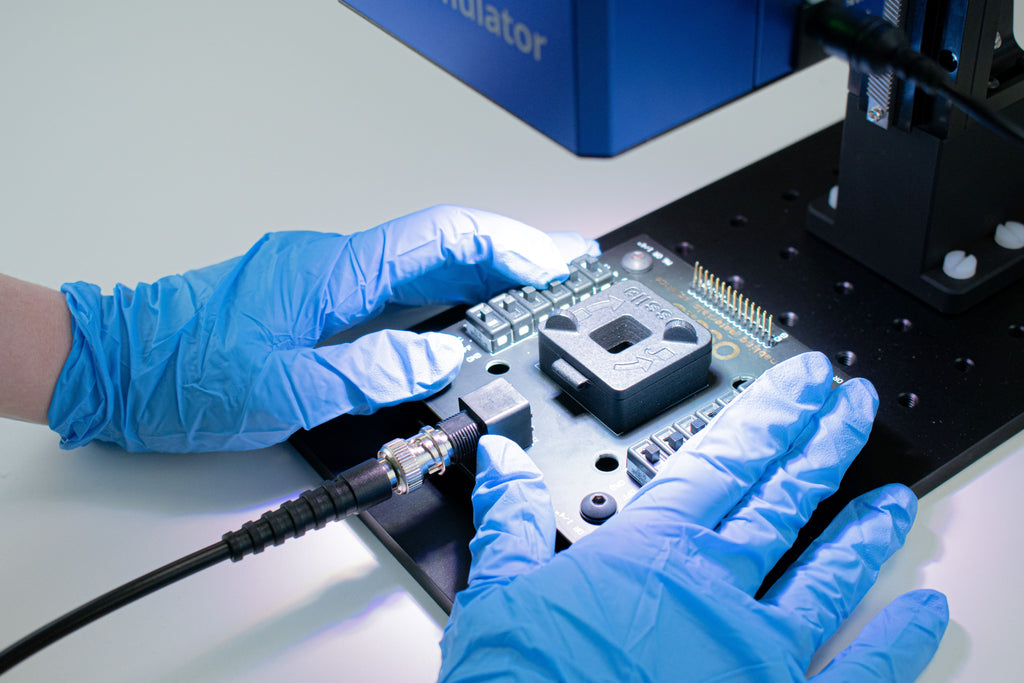
Simple, Modular Testing Setup
Set up a high quality testing lab by combining the Ossila LED Solar Simulator with our testing systems, test boards, and substrates. With its own optical breadboard included, it can be placed on any work top, or even fixed to larger optical benches. The compact design is perfect for busy workstations and can also be used in closer spaces where space is limited, such as a glove box* or in a laminar flow hood.
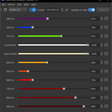
Adapt the Spectral Output
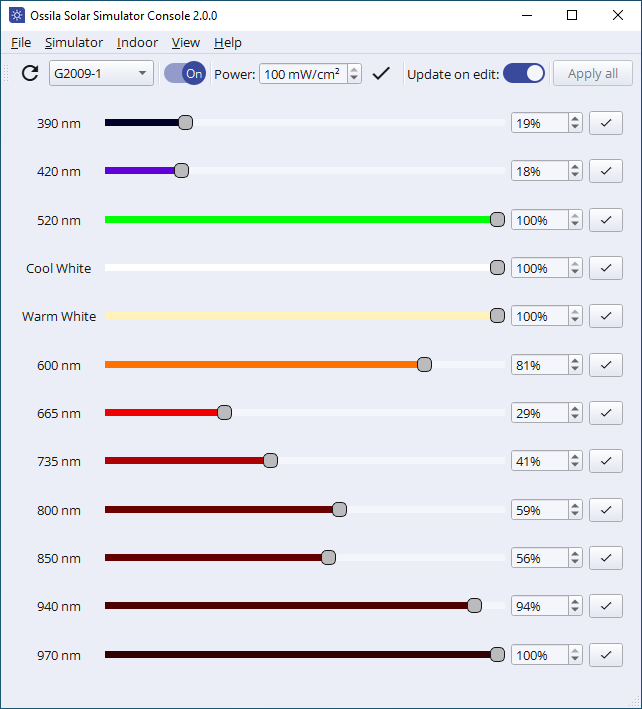
Change the total irradiance output or control the power output of each LED individually. With the flexibility of a tunable spectrum, you can align your testing with specific lighting spectrums conditions. This solar simulator can also be calibrated to test indoor photovoltaics according to newly defined standards.
* Not for use in volatile environments.
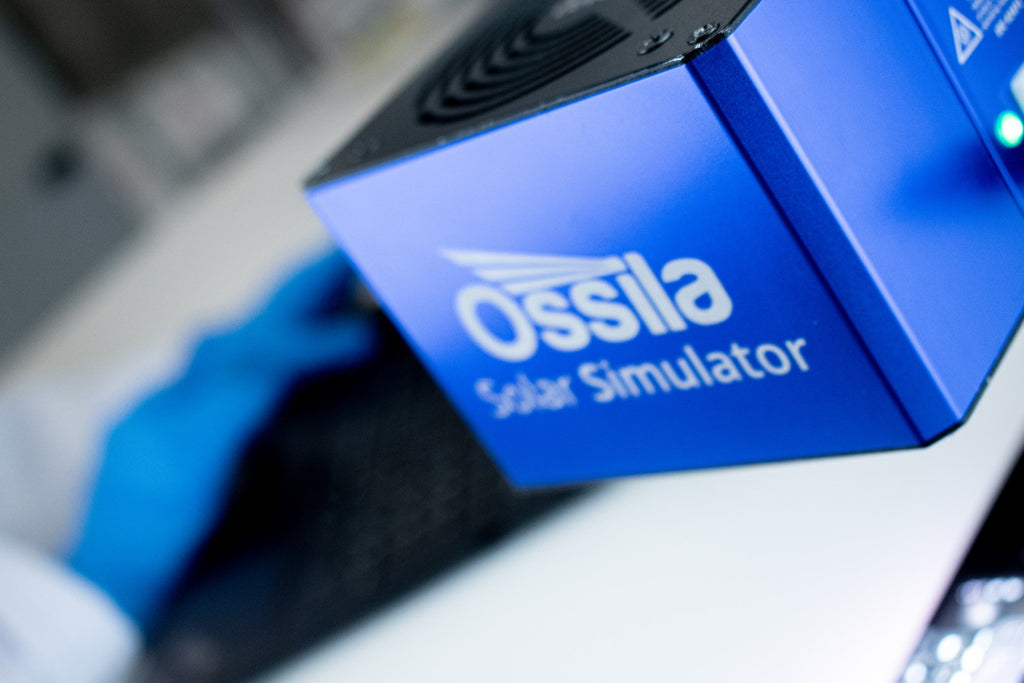
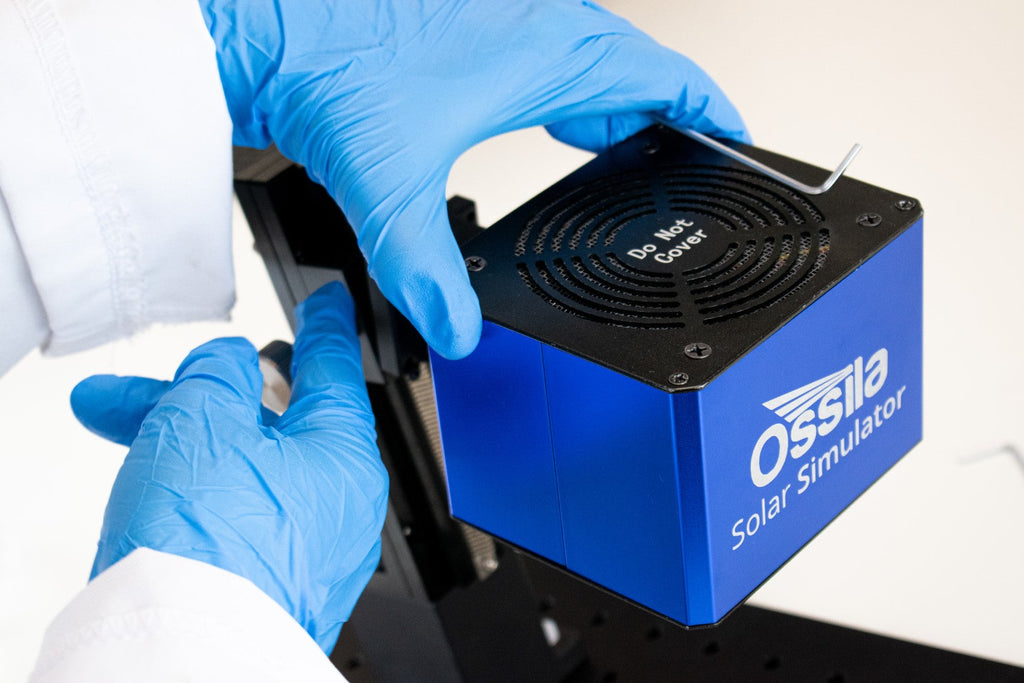
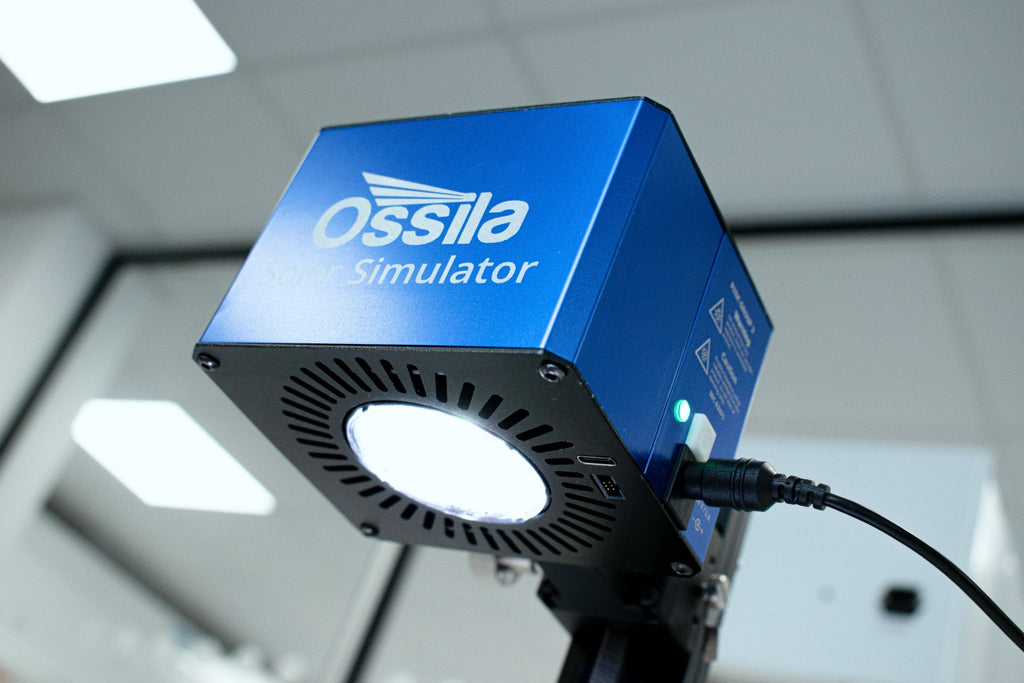
LED Solar Simulator Gallery

Software
The Ossila Solar Simulator Console enables you to control and customize the output of your LED solar simulator. You can choose the overall power level or control each LED individually to tailor the output to your specific requirements. The user-friendly software can be installed on as many PCs as you want and you can access future updates for free. You can also control the lamp using a serial command library. This can be useful for specialist measurements or non-conventional spectral output.
Software Requirements
| Operating System | Windows 11 (64-bit) |
|---|---|
| CPU | Dual Core 2 GHz |
| RAM | 4 GB |
| Available Hard Drive Space | 152 MB |
| Monitor Resolution | 1440 x 960 |
| Connectivity | USB |
In the Box
- LED solar simulator
- Optical breadboard
- Adjustable height stand
- USB Driver with calibration certificate & QC test data
Resources and Support
 What is Different About the Ossila LED Solar Simulator?
A solar simulator is an essential piece of equipment for any lab working with photovoltaics, optoelectronics, or any research that requires a simulated sunlight environment. They provide an accurate and repeatable source of light that is essential for conducting photovoltaic research. But how do you choose the right solar simulator?
Read more... Controlling The Solar Simulator With Solar Simulator Console
The Ossila Solar Simulator Console enables you to control and customize the output of your LED solar simulator. You can choose the overall power level or control each LED individually to tailor the output to your specific requirements. The user-friendly software can be installed on as many PCs as you want and you can access future updates for free.
Read more...