FKM MEA and GDE Gasket
Low Gas Crossover for Hydrogen and Oxygen Containment in Fuel Cells
Reliable airtight sealing while securing electrode materials
Specifications | Gallery | Literature | Related Products | Technical Support
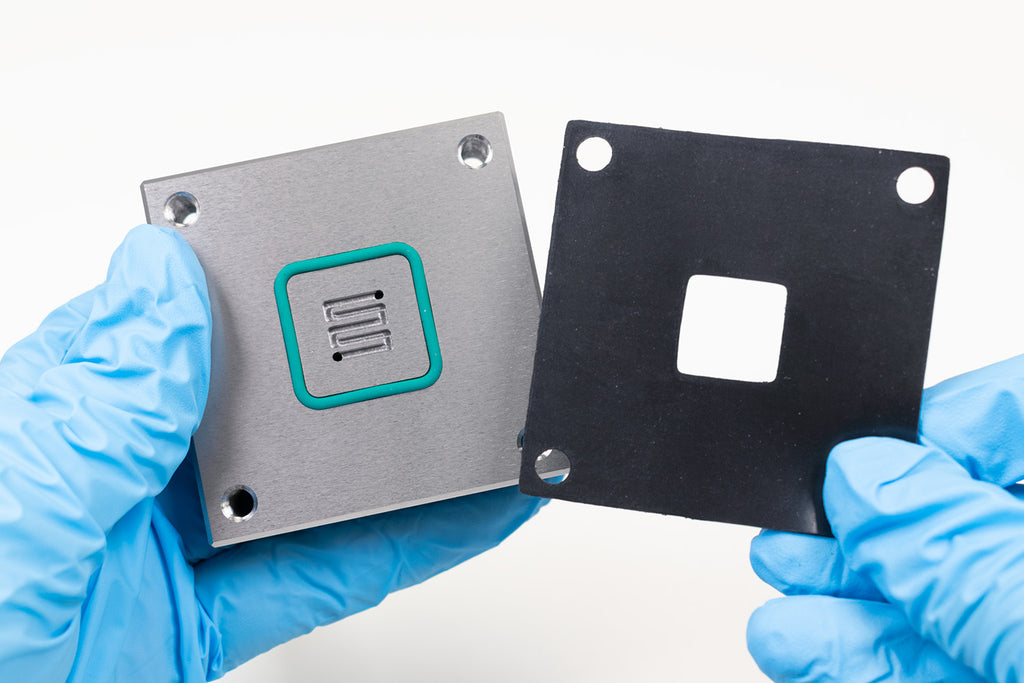
Known for its excellent chemical resistance, FKM gaskets are widely used as a seal in electrochemical setups, fuel cells, or MEA electrolyzers to prevent gas and electrolyte leakage, and maintain compression for effective electrochemical process. The low gas crossover rates of FKM are vital for hydrogen and oxygen containment in fuel cells, and its superior compression resistance and dimensional stability are useful under sustained high compression load.
These FKM gaskets show good resistance to most mineral acids at moderate temperature, and also shows excellent resistance to ozone, oxidation, and weathering. However, FKM is degradable in alkaline conditions with a high concentration (>10%), steam, amines, and polar solvents at elevated temperatures with prolonged exposure. For strongly alkaline electrolytes, PTFE or EPDM gaskets are a more chemically robust choice.

Acid & Mild Alkaline Stability
Excellent choice to use in PEM and mild-alkaline AEM electrolyzers

Low Gas Permeability
Supports accurate gas-evolution tracking

Reliable Reusability
Strong elastomeric compression recovery supporting repeated use

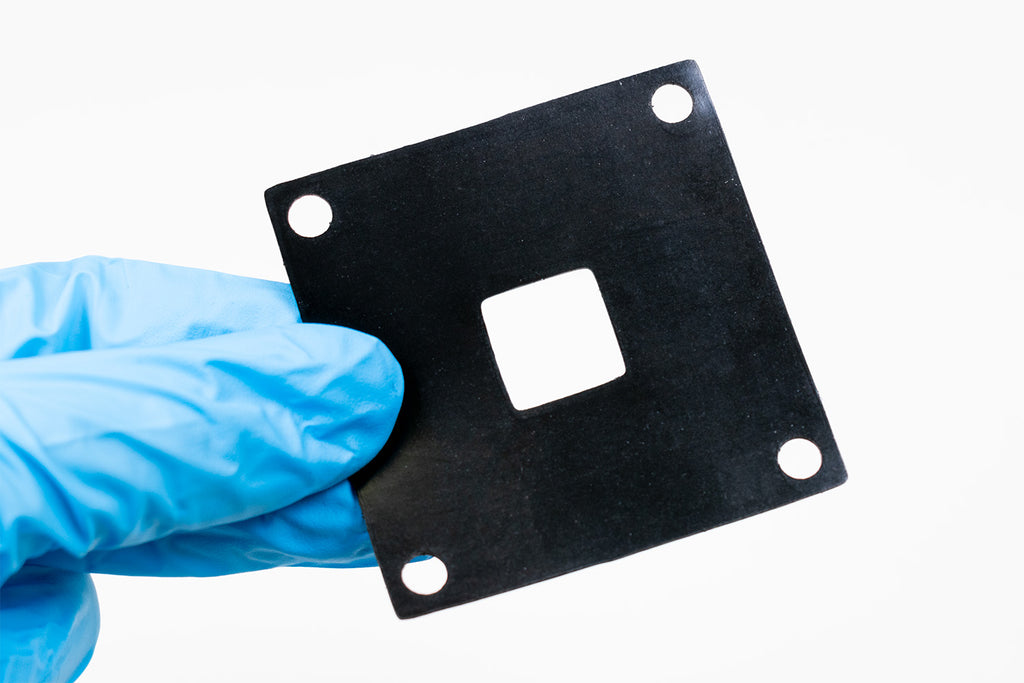
Precision-Cut Gasket
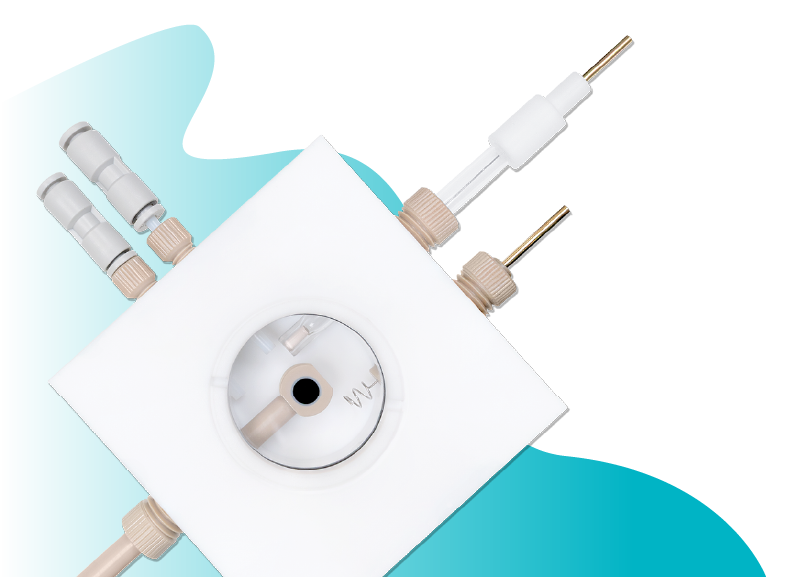
Fits well into Ossila MEA Electrolyzers and GDE Flow Cells
Specifications
| Material | FKM |
|---|---|
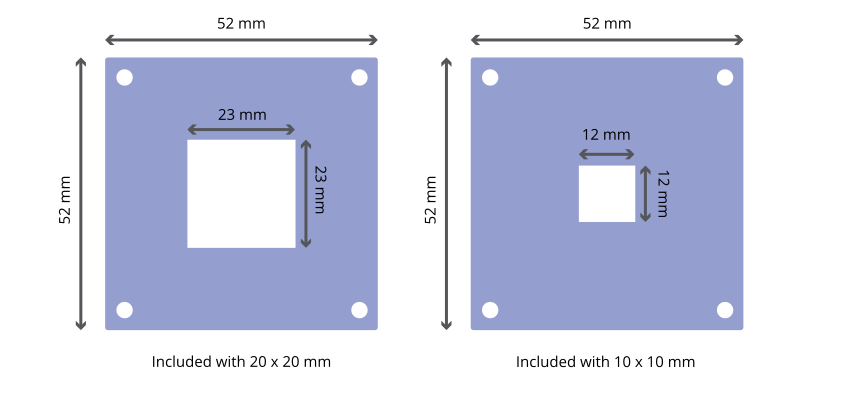
| Overall Dimensions | 52 mm x 52 mm |
| Available Window Dimensions | 12 mm x 12 mm, 23 mm x 23 mm |
| Pack Size | 5 |
Product Gallery

Literature and Reviews
- J. Jung et al. (2021), Determination of permeation properties of hydrogen gas in sealing rubbers using thermal desorption analysis gas chromatography, Sci. Rep., 11, 17092; DOI: 10.1038/s41598-021-96266-y.
- A. Olabi et al. (2022), Novel Trends in Proton Exchange Membrane Fuel Cells, Energies, 15(14), 4949; DOI: 10.3390/en15144949.
- S. Barwe et al. (2018), Overcoming cathode poisoning from electrolyte impurities in alkaline electrolysis by means of self-healing electrocatalyst films, Nano Energy, 53, 763-768; DOI: 10.1016/j.nanoen.2018.09.045.
- L. Xie et al. (2025), Effects of Cell Configurations and Operating Conditions on Cathode Gas-Phase Products of SO2-Depolarized Electrolyzers, Intl. J. Energy Res., 261641; DOI: 10.1155/er/7261641.